How To Stop Noodling on Guitar
 Rob Lobasso
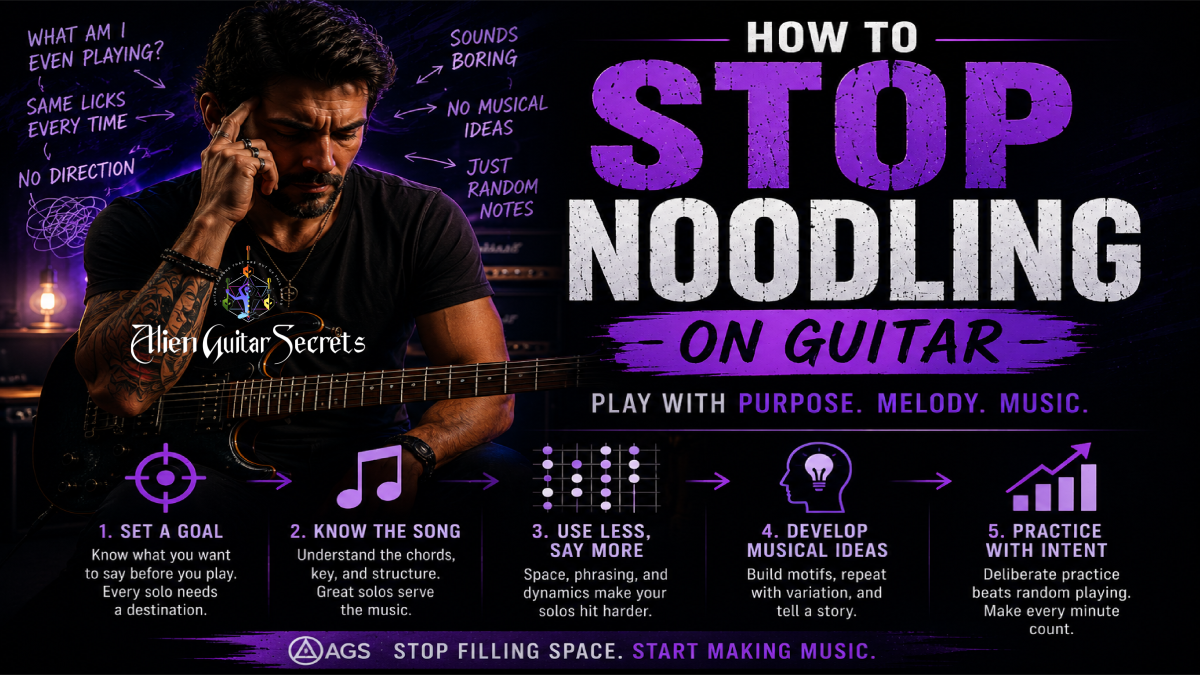
Learn how to stop noodling on guitar and start playing with intention, phrasing and musical direction instead of random notes and patterns.
🎸 How To Stop Noodling on Guitar
We’ve all done it.
You pick up the guitar…
…and suddenly:
- random pentatonic licks
- disconnected scale runs
- familiar phrases
- muscle-memory autopilot
for the next 45 minutes.
Then you stop and think:
👉 “What did I actually just practise?”
That’s noodling.
And honestly…
Most guitarists spend years trapped in it.
What Is Noodling?
Noodling is:
👉 playing without direction.
It usually sounds like:
- random notes
- recycled licks
- unconscious movement
- scale wandering
Now to be clear:
There’s nothing wrong with casual exploration.
Sometimes noodling can even spark creativity.
But if it becomes your main form of playing…
👉 progress slows dramatically.
Why Guitarists Noodle
Because noodling feels productive.
You’re:
- moving
- playing
- improvising
- making noise
But mentally?
👉 you’re usually operating on autopilot.
Most noodling happens because the player has:
- no target
- no phrasing idea
- no rhythmic intention
- no harmonic awareness
So the fingers simply repeat what they already know.
The Comfort Zone Trap
This is huge.
Most guitarists have:
👉 5–10 “safe” phrases
they unconsciously recycle forever.
Usually:
- the same bends
- same pentatonic box
- same rhythms
- same endings
That’s why playing can start feeling repetitive.
Because it is.
Why Noodling Prevents Growth
Growth happens when the brain is engaged.
Not when:
❌ muscle memory takes over completely.
If you always play:
- the same ideas
- the same positions
- the same licks
your musical vocabulary stops expanding.
Music Needs Intention
Great improvisers don’t just “move fingers.”
They think about:
- melody
- phrasing
- tension
- rhythm
- harmony
- emotional direction
Every phrase has:
👉 purpose.
How To Stop Noodling
Here’s where things change.
1. Set a Clear Goal
Before you play, ask:
👉 “What am I working on?”
For example:
- phrasing
- intervals
- rhythm
- chord tones
- dynamics
A focused session always beats random wandering.
2. Limit Yourself
This is incredibly powerful.
Try improvising with:
- only 3 notes
- one string
- one rhythmic idea
- one position
Constraint creates creativity.
3. Target Chord Tones
Instead of randomly running scales…
👉 follow the harmony.
Now your solos sound connected to the music.
4. Use Space
Most noodling comes from:
👉 fear of silence.
But silence creates:
- tension
- phrasing
- emotional impact
Sometimes the best thing you can play…
is nothing.
5. Build Musical Conversations
Think like a singer.
Use:
- call and response
- repeated motifs
- variation
- breathing room
Music should sound like communication.
Not typing.
6. Slow Down
A lot of noodling hides behind speed.
Slowing down forces:
- awareness
- phrasing
- intentional note choice
That’s where real growth begins.
The AGS Perspective
At Alien Guitar Secrets, improvisation is not:
❌ random movement
It’s:
✅ intentional expression
The goal is not to fill every second with notes.
The goal is:
👉 to say something meaningful.
🎯 Take This Further
Inside the Fretboard Mastery Course, you’ll learn how to:
- improvise intentionally
- phrase musically
- target chord tones
- connect scales and harmony
- stop relying on autopilot patterns
👉 https://www.alienguitarsecrets.com.au/courses/fretboard-mastery-course
Final Thought
Noodling usually happens when:
👉 the fingers lead the music.
Great improvisation happens when:
👉 the mind, ear and emotion lead the fingers.
That’s the difference.
Peace,
Rob Lobasso 👽🎸🤘
Continue Learning
- Octave Shapes Every Guitarist Should Know
- The Best Way To Practice The Guitar Fretboard
- Why Guitarists Feel Lost on the Fretboard
- How To Memorise The Guitar Fretboard
- The Guitar Fretboard Notes Explained
- Guitar Intervals Explained
- The 5 Formulas That Unlock The Guitar Fretboard
- How To Find Any Note On The Guitar Fretboard
- A New Way To See the Fretboard
- How To Write Face Melting Guitar Licks
- Locking Tremolo Guide
- Frustrated With Guitar? Here’s Why You’re Not Progressing
- The Pentatonic Scale Explained: Stop Playing Shapes and Start Making Music
- Ear Training for Guitar: How to Actually Hear What You’re Playing
- Sing What You Play: The Missing Link Between Your Ear and the Fretboard
- The Difference Between Playing Music and Feeling Music
- How to Practise Guitar Effectively: The AGS Practice Method
Categories: : alien guitar secrets, guitar practice problems, meditation, scales, noodling, playing with purpose, mindfulness, joy, meaning