🎸 The Pentatonic Scale Explained: Stop Playing Shapes and Start Making Music
 Rob Lobasso
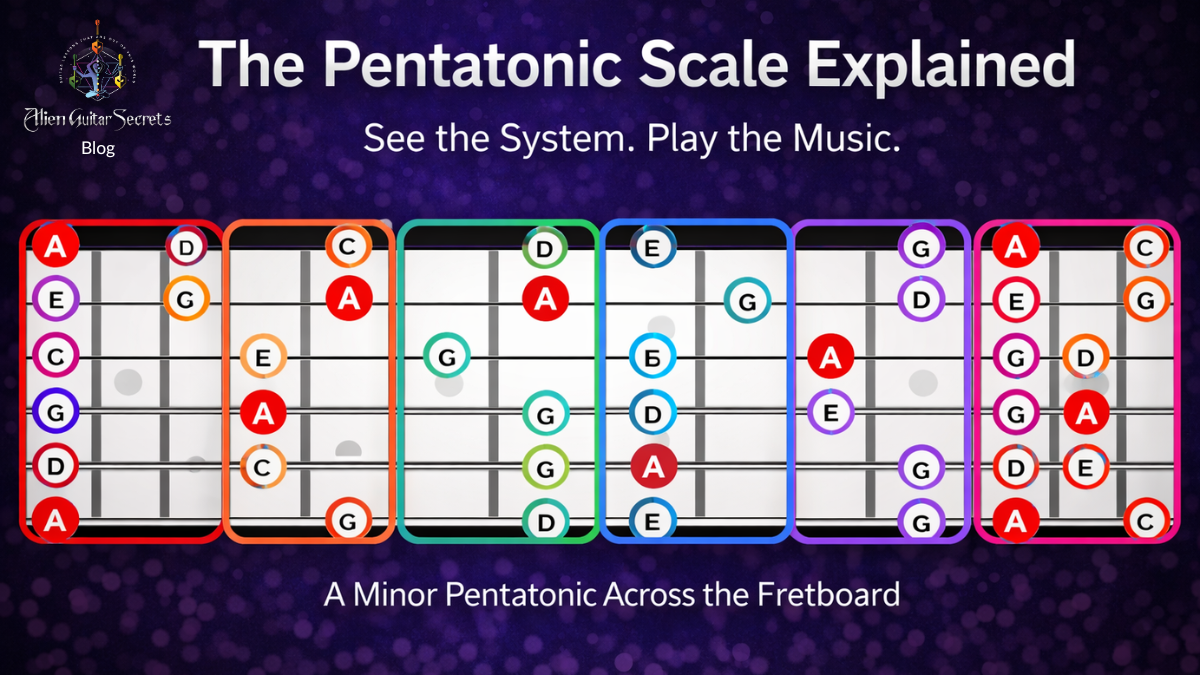
Learn how to use the pentatonic scale properly on guitar. Go beyond shapes and boxes to understand intervals, phrasing, and real musical application.
🎸 Why the Pentatonic Scale Is Both Powerful… and Misunderstood
Every guitarist learns the pentatonic scale.
It’s usually one of the first things you’re shown.
👉 And that’s where the problem begins.
Because most players are taught this:
👉 Memorise a box
👉 Run it up and down
👉 Hope it sounds good
And sometimes it does.
But after a while?
👉 Everything starts sounding the same.
❌ The Problem with “Box Thinking”
The issue isn’t the scale.
👉 The pentatonic scale is one of the most powerful tools in music.
The issue is:
👉 How it’s taught
Most players:
- Stay stuck in one position
- Think in shapes instead of sound
- Don’t understand what the notes actually are
So instead of making music…
👉 They’re just running patterns.
🎯 What the Pentatonic Scale Actually Is
Let’s simplify it.
The minor pentatonic scale is:
👉 1 – b3 – 4 – 5 – b7
That’s it.
Five notes.
But those five notes?
👉 Are incredibly musical.
🔗 The Missing Link: Intervals
This is where everything changes.
Instead of thinking:
👉 “Box 1… Box 2…”
Start thinking:
👉 Intervals
- Root (1)
- Minor 3rd (b3)
- 4th (4)
- 5th (5)
- Minor 7th (b7)
Now you’re not just playing shapes…
👉 You’re understanding sound.
🎸 Major vs Minor Pentatonic (The Same System)
Here’s something most players miss:
👉 Major and minor pentatonics are connected.
They’re the same notes — just viewed from a different root.
Example:
- A minor pentatonic = C major pentatonic
👉 Same notes
👉 Different perspective
This is where fretboard freedom begins.
🌌 The AGS Approach to Pentatonics
Inside Alien Guitar Secrets, we don’t treat pentatonics as shapes.
👉 We treat them as a system
🧩 1. Connect the Neck
Instead of isolated boxes:
👉 Learn how shapes connect horizontally and diagonally
🧩 2. Focus on Target Notes
Not all notes are equal.
👉 Target:
- Root
- b3
- 5
This creates strong phrasing.
🧩 3. Use Phrasing, Not Patterns
This is where music happens.
👉 Bend
👉 Slide
👉 Pause
👉 Repeat ideas
🧩 4. Break Repetition
If everything you play sounds the same:
👉 You’re repeating patterns.
Instead:
👉 Change rhythm
👉 Change direction
👉 Change starting point
🔥 Why Most Players Get Stuck
They never move past:
👉 Mechanical playing
They don’t:
- Hear what they’re playing
- Understand intervals
- Connect positions
🎯 The Real Goal
The goal isn’t:
👉 “Know the pentatonic scale”
The goal is:
👉 Use it musically, anywhere on the fretboard
🔗 How This Connects to Everything Else
This ties directly into:
- Ear training
- Singing what you play
- Fretboard mapping
- Improvisation
👉 It’s all one system.
🎯 Take This Further
Inside the Fretboard Mastery Course, pentatonics are taught as part of a complete system:
- Understand intervals across the fretboard
- Connect scale patterns seamlessly
- Apply pentatonics to real music
- Improvise with confidence and freedom
👉 If you’re ready to break out of boxes and actually use the scale:
https://www.alienguitarsecrets.com.au/courses/fretboard-mastery-course
🎸 Final Thought
The pentatonic scale isn’t the problem.
👉 The way you’ve been taught it is.
Once you understand it properly…
👉 It becomes one of the most powerful tools you’ll ever use.
Peace, Rob Lobasso 👽🎸🤘
Continue Learning
- Octave Shapes Every Guitarist Should Know
- The Best Way To Practice The Guitar Fretboard
- Why Guitarists Feel Lost on the Fretboard
- How To Memorise The Guitar Fretboard
- The Guitar Fretboard Notes Explained
- Guitar Intervals Explained
- The 5 Formulas That Unlock The Guitar Fretboard
- How To Find Any Note On The Guitar Fretboard
- A New Way To See the Fretboard
- How To Write Face Melting Guitar Licks
- Locking Tremolo Guide
- Frustrated With Guitar? Here’s Why You’re Not Progressing
- The Pentatonic Scale Explained: Stop Playing Shapes and Start Making Music
- Ear Training for Guitar: How to Actually Hear What You’re Playing
- Sing What You Play: The Missing Link Between Your Ear and the Fretboard
- The Difference Between Playing Music and Feeling Music
- How to Practise Guitar Effectively: The AGS Practice Method
Categories: : blue note, blues, boxed in, boxes, pentatonic scale, pentatonics, shapes