Why Modes Confuse Guitarists
 Rob Lobasso
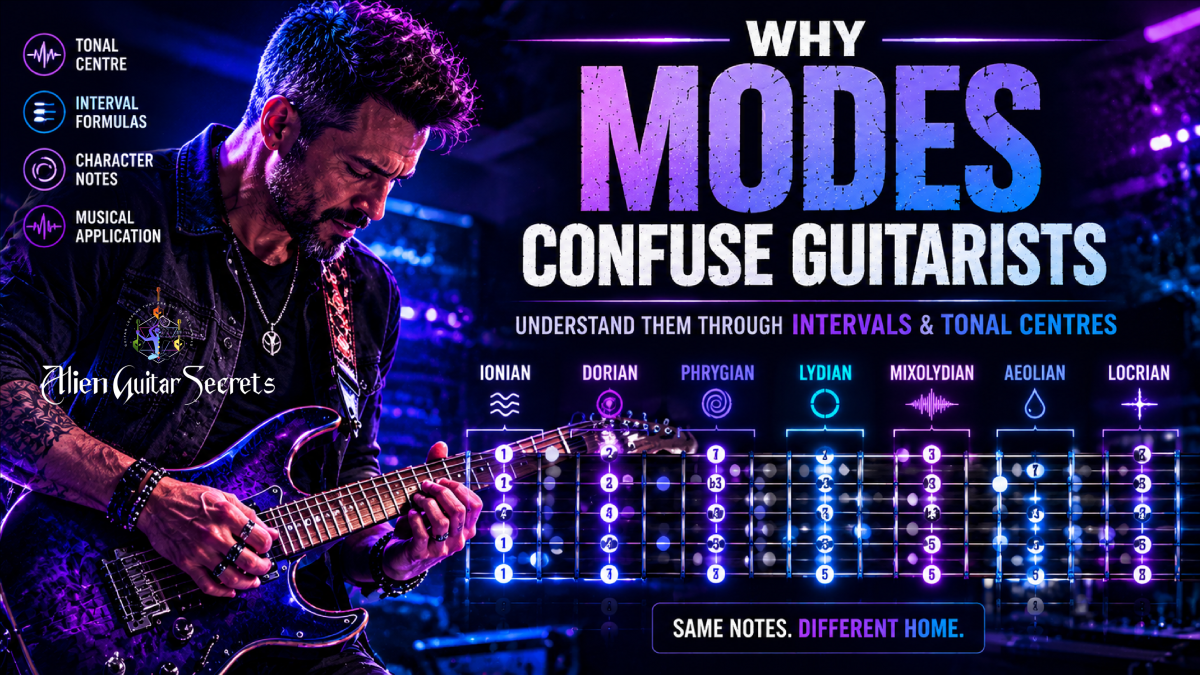
Confused by guitar modes? Learn why most players struggle with modes and how to finally understand them musically instead of memorising shapes.
🎸 Why Modes Confuse Guitarists
Let’s be honest…
Modes confuse the hell out of most guitarists.
And honestly…
👉 it’s not your fault.
Because modes are usually taught in the most backwards way imaginable.
You’re shown:
- seven patterns
- seven Greek names
- seven positions
…and expected to magically sound musical with them.
So what happens?
👉 Everything feels mechanical.
The Biggest Myth About Modes
Most players think modes are:
❌ completely different scales
They’re not.
Modes are simply:
👉 different perspectives of the same parent scale. They're like moods.
That’s it.
The Real Problem
The issue is that most guitarists learn:
👉 the shapes
before they understand:
👉 the harmony
So they memorise:
- Ionian
- Dorian
- Phrygian
- Lydian
…but have no idea:
- when to use them
- why they sound different
- what makes each one unique
That’s why modes become confusing.
Because they’re being learned visually…
instead of musically.
Modes Are About Tonal Centres
This is the breakthrough.
Take the C Major scale:
C D E F G A BC\ D\ E\ F\ G\ A\ BC D E F G A B
If C feels like “home”…
👉 you hear Ionian.
If D feels like “home”…
👉 you hear Dorian.
Same notes.
Different emotional centre.
That’s what creates the modal sound.
Why Modes Sound Different
Each mode contains a different interval formula.
For example:
Ionian
1 2 3 4 5 6 71\ 2\ 3\ 4\ 5\ 6\ 71 2 3 4 5 6 7
Dorian
1 2 b3 4 5 6 b71\ 2\ b3\ 4\ 5\ 6\ b71 2 b3 4 5 6 b7
That natural 6 in Dorian…
👉 is the colour tone.
That’s the sound.
Modes are really:
👉 interval personalities.
The Shape Trap
This is where most players get stuck.
They practise:
- mode pattern 1
- mode pattern 2
- mode pattern 3
…but never hear the modal flavour.
So instead of sounding modal…
👉 they just sound like scales.
How to Actually Learn Modes
Keep this simple.
1. Learn the parent major scale first
This is essential.
2. Understand the interval formula
Know what makes the mode unique.
3. Focus on the characteristic note
This is huge.
For example:
- Dorian = natural 6
- Lydian = #4
- Mixolydian = b7
4. Use a drone or vamp
Modes are heard through harmony.
Not isolated exercises.
The AGS Perspective
At Alien Guitar Secrets, modes are not:
❌ seven random shapes
They’re:
✅ emotional variations of interval relationships
Once you understand that:
👉 modes become expressive instead of confusing.
Why This Changes Everything
Once modes click:
- improvisation becomes deeper
- phrasing becomes more intentional
- harmony starts making sense
And suddenly…
👉 the fretboard becomes far more musical.
🎯 Take This Further
Inside the Fretboard Mastery Course, you’ll learn how to:
- Understand modes through intervals and harmony
- Hear the characteristic tones of each mode
- Connect modes across the entire fretboard
- Use modal playing musically instead of mechanically
👉 https://www.alienguitarsecrets.com.au/courses/fretboard-mastery-course
Final Thought
Modes aren’t confusing because they’re difficult.
They’re confusing because most guitarists are taught shapes before sound.
Understand the sound first…
👉 and the fretboard starts making sense.
Peace,
Rob Lobasso 👽🎸🤘
Continue Learning
- Octave Shapes Every Guitarist Should Know
- The Best Way To Practice The Guitar Fretboard
- Why Guitarists Feel Lost on the Fretboard
- How To Memorise The Guitar Fretboard
- The Guitar Fretboard Notes Explained
- Guitar Intervals Explained
- The 5 Formulas That Unlock The Guitar Fretboard
- How To Find Any Note On The Guitar Fretboard
- A New Way To See the Fretboard
- How To Write Face Melting Guitar Licks
- Locking Tremolo Guide
- Frustrated With Guitar? Here’s Why You’re Not Progressing
- The Pentatonic Scale Explained: Stop Playing Shapes and Start Making Music
- Ear Training for Guitar: How to Actually Hear What You’re Playing
- Sing What You Play: The Missing Link Between Your Ear and the Fretboard
- The Difference Between Playing Music and Feeling Music
- How to Practise Guitar Effectively: The AGS Practice Method
Categories: : aeolian, diatonic harmony, dorian, ionian, locrian, lydian, mixolydian, modes, phrygian